A new report, paid for by a grant from the World Health Organisation, finds that one in 5 of the world’s population has genital herpes.
This is an estimate based on studies in countries around the world. It is an update on the study published in 2016 using improved data. The authors have broken down the data into continents/WHO regions. The highest rate is in Africa and the Western Pacific Region. Overall, over 900 million people have genital infection – and many more have facial infection.
There is one other ‘good’ herpes organisation, apart from ours and it has award winning videos about herpes… The New Zealand Herpes Foundation has just issued a series of videos. They are GREAT.
If you have had the virus for a while, we expect you will have symptoms less often and more mildly. But we do get people calling our helpline who ask “Why have my herpes episodes got more frequent, now?” This is a fairly common question.
A common question by callers on our helpline (0345 123 2305) is often “Why didn’t I catch herpes on my face and genitals? We did oral sex as well as regular sex. So surely I should have seen symptoms in both places instead of only on my genitals.”
We have not found any medical papers on this topic, although “having herpes on genitals as well as face” is something that is mentioned in reported case histories of individual patients.
You may see ‘Are they working on a cure for herpes?’ on forums and in internet questions.
The answer is a resounding “YES.” The medical world is well aware that there area many people who have too many recurrences. And some of them know how badly the ‘idea of having herpes’ affects society – especially in America. There are fortunes to be made…
Can we guess when a cure for herpes might be available? NO, WE CANNOT. There is no way to know when a breakthrough will occur. So, do not put your life “on hold” until they invent something new. Learn to live in harmony with the virus. Our resources will enable you to do just that.
New reports
Weekly, the HVA is sent links to newly published scientific articles which include the word ‘herpes’. We get between 23 and 156each week. Some are about herpes varicella or herpes zoster – but plenty are about herpes simplex too.
Most papers report research in silico (computer based i.e. “in silicon”), or in vitro (“in glass” i.e. using cells growing in the laboratory). We occasionally report on these for the monthly updates our subscribers are sent.
Occasionally, the research reports working in vivo (in living organism) and this is when we start looking seriously at their work.
What kind of research is being done on on a cure for herpes?
The biggest perk of this job by far is making a difference in people’s lives and giving people the tools to reclaim their confidence and their sex lives. Occasionally, people who call us in a state of anxiety about telling a partner ring us back to let us know how it went (something we encourage, we love a happy ending) but for the first time yesterday I had a two-for-one.
Nothing new to report on the Rational vaccine trial. They had thought they’d need to interview 200 people. But after they had collected the experiences of 60 volunteers, they considered that that was enough. These people were all people who had found that the antivirals did not suppress their symptoms and they were keen to try something different.
We were told that Rational Vaccines’ researchers would write up this report. But nothing has been published. The doctors who were briefing the patient advocates – our director Marian Nicholson in the UK and a New York patient advocate – have fallen silent.
We await the next stage of their research with interest. Perhaps they will actually inject people at some stage? We don’t know when.
Read the background to this research below…
No more volunteers needed, now.
Rational Vaccines has started their trial with a survey in UK. Anyone following the research that is being done into herpes simplex will be glad hear this. After this stage, they will move onto the actual injection stage…
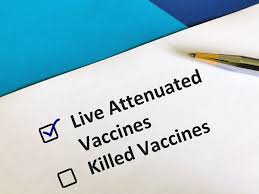
We know that the possibility of a vaccine has long been hoped for. The research will find out, firstly, can the vaccine treat people having innumerable recurrences and, secondly, prevent uninfected people from being able to catch herpes simplex. This is a live attenuated virus vaccine – like the ones used to prevent chickenpox and shingles.
The Rational Vaccine company has started trials in the UK. These are based at the Royal South Hampshire Hospital in Southampton and at the Chelsea and Westminster Hospital in London.
However, the exact venue is not very relevant. For this stage, they are collecting information by phone or video calls from 200 people. People taking part will be asked the details about how many outbreaks they are having, how they treat them, how good they feel the treatment is. This will be to prove that there is a need for a better way of treating genital herpes. Then in due course, the researchers will choose some couple of dozen people to actually get the vaccine. (They now have more than 200 volunteers.)
To follow the Rational Vaccines trial news
To follow the Rational Vaccines trial news, and indeed news of other trials around the world, you can check back on the news page. Or subscribe for prompt alerts.
This page was published on 2-9-2022 and updated on 24-7-2023 and
BBC South East reports that “Raffy Holliday, from Deal in Kent, tested positive for the HHV6 strain in hospital, and he died in March,” but this was not herpes simplex: parents don’t need to be worried about this.
The reporters don’t explain that HHV-6 – commonly called roseola – is not ‘herpes’ in the usual sense. When anyone says ‘herpes’ people think of genital herpes. The reporters didn’t check to find that there are 9 different conditions caused by 9 different herpes viruses. Other well-known herpes viruses are chickenpox (HHV-3) and glandular fever (HHV-4).
Infections with human herpesvirus 6 (HHV-6) are very common. In fact, almost 100% of us will have encountered it. There are two types of HHV-6 (A and B) and the one Raffy had will have been HHV-6B, not herpes simplex. Roseola is common childhood disease expected to resolve without treatment. The child may have high fever for a few days, and a mild skin rash may develop. Sometimes, paracetamol or ibuprofen might be given.
But Raffy had leukemia. This means his immune system was not able to function in the normal way. Parents of children (who do not have such a serious condition) do not need to worry if their children develop roseola. They will be well in a few days or so…