
This recent BBC report about the tragic death of a newborn baby has understandably caused considerable anxiety among parents, particularly mothers who have experienced cold sores or genital herpes. We would like to offer some reassurance, explain the facts and put the risks into perspective.
First and foremost, our deepest sympathies go to the family involved. The loss of a child is devastating, and nothing in this article is intended to minimise that tragedy.
However, it is very important that such exceptional cases are reported with appropriate medical context, so that parents are informed rather than unnecessarily frightened.
Can herpes be dangerous to newborn babies?
Yes, but the key word here is ‘can’. A common cold can be dangerous to newborn babies. Herpes simplex virus (HSV), which causes cold sores and genital herpes, can cause serious, occasionally life-threatening illness in newborn babies.
Can does not mean will, and it certainly does not mean usually does.
Neonatal herpes is very rare in the UK. Recent surveillance data indicates approximately seven cases per 100,000 live births.
That is approximately one case in every 16,700 births. Now, how many children die in car accidents or are mauled to death by family dogs? We don’t routinely terrify parents with the possibility of either. Why should herpes simplex be treated any differently?
When neonatal herpes does occur, it requires urgent medical attention. However, the overwhelming majority of babies born in the UK do not develop this infection.
Both these facts matter.
Most mothers with herpes already have protective antibodies
One of the most important and reassuring facts about herpes in pregnancy is the role of the mother’s immune system.
When someone acquires herpes simplex virus type 1 or type 2, their immune system develops antibodies against the virus. During pregnancy, these antibodies can cross the placenta and provide the baby with a valuable protection during its first months of life.
This means that a mother who has had cold sores or genital herpes for at least several months before giving birth will have antibodies that pass to a newborn baby and protect at birth and for months afterwards.
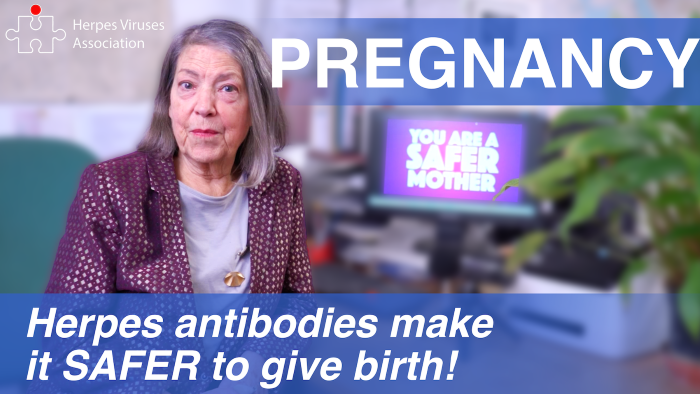
Explained fully on our pregnancy page.
Or see our video here:
Cold sores are herpes — and always have been
The BBC article quotes the bereaved mother explaining that she had previously associated herpes only with sexually transmitted infections.
This highlights a significant gap in public understanding.
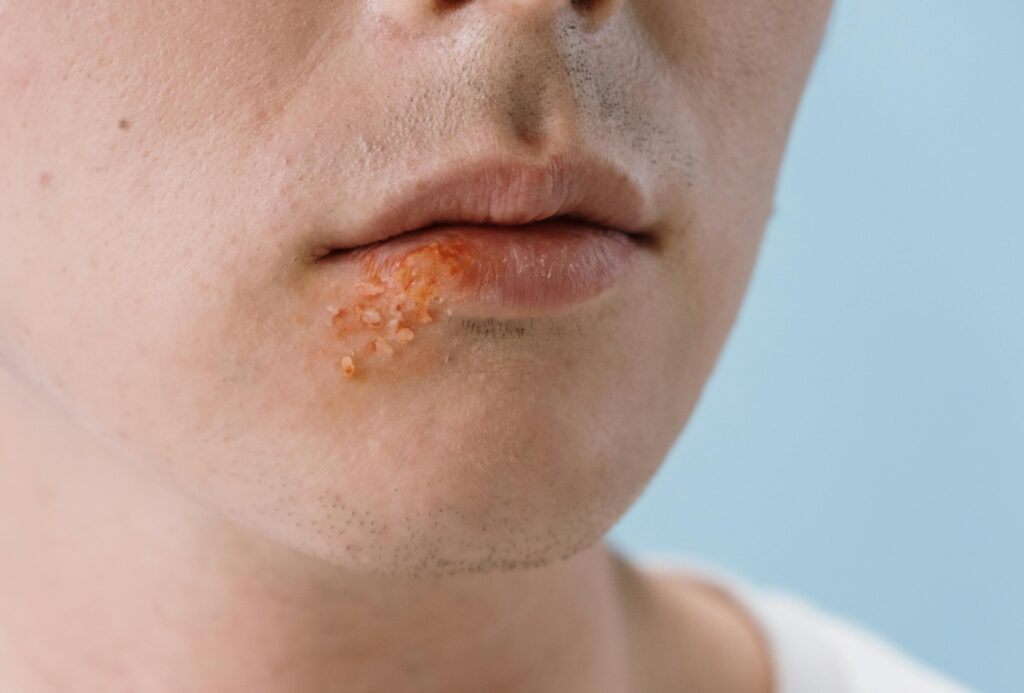
Cold sores are caused by herpes simplex virus, usually herpes simplex type 1. Genital herpes can be caused by either type 1 or type 2.
These are not separate categories of disease with entirely different viruses. They are infections caused by closely related viruses that can affect any area of the body.
Unfortunately, particularly in the UK and US, public discussion and sexual health education have too often treated genital herpes as something fundamentally different from the familiar cold sore.
This has contributed to confusion, misunderstanding and unnecessary stigma.
Better education would help people understand both how common HSV is and when particular precautions are genuinely necessary.
What precautions should parents take with a newborn baby?
Parents do not need to live in fear of herpes, but some straightforward precautions are sensible during the newborn period.
- Anyone with an active cold sore should avoid kissing a newborn baby until the sore has completely healed. After all, kissing babies is largely for the pleasure of the adult, not the baby. The baby neither expects nor needs to be kissed, so why take an unnecessary risk?
- Wash hands before handling a newborn baby
- Tell your midwife or doctor if you develop herpes for the first time during pregnancy, especially in the final trimester.
- Seek urgent medical attention if a newborn becomes unusually sleepy, feeds poorly, develops a fever or otherwise appears unwell. This is sensible advice for any potentially serious illness, not just herpes simplex. Importantly, neonatal herpes does not always cause visible blisters, so their absence should not be taken as reassurance.
These are practical precautions, not reasons for parents to become fearful of ordinary affection or family life.
Parents deserve accurate information, sensible advice and reassurance — not fear without perspective.
Published 20/10/2026