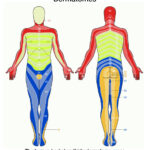
How do I find out if I have type 1 on my genitals?
There are two types of herpes simplex: type 1 or type 2. The only way to know which you have is from a swab taken from your sore. A sexual health clinic will send the sample to a laboratory. Most clinics ask the lab to supply information on type, but some do not. In these cases, the patient will just be told that they have ‘herpes’.
Do not use the blood tests advertised on the internet. These are often incorrect – and a positive result could mean that you had a facial sore at some time, and your genital symptoms are something else.
What is the difference between type 1 and type 2?
The symptoms from both types look and feel the same. However, there are differences that depend on the area infected. Type 1 symptoms are expected to recur more frequently when the virus has been caught on the face, type 2 when it is caught on the genitals. These differences have been identified by carrying out studies on large numbers of patients. Individuals will find that they get frequent symptoms or almost none, regardless of type because immune systems vary.
How is type 1 caught on the genitals?
Many more people have herpes simplex type 1 than type 2. It causes most facial cold sore infections. When it is diagnosed on the genitals it has usually been caught from oral sex. Often the person it is caught from does not know that they get cold sores (herpes simplex type 1 cold sores), because what they experience is so mild and they have few or no symptoms at the time it is passed on.
I thought all genital infection was type 2?
Many people are under the impression that type 1 is facial and type 2 is genital. This is not the case. If you catch type 1 on your genitals from someone with type 1 (probably through oral sex) it remains type 1 even though it is not on your face and will not appear on your face. Type 1, when it has been caught on the genitals, will only recur in the genital and anal area (dermatome)
Do I need to worry about passing on type 1 from my genitals? Transmission from the genitals
It is possible to pass herpes simplex type 1 on, when you have it on the genitals, but this is very much less likely than with type 2, because type 1 is less likely to recur genitally. Fewer recurrences also mean there are fewer occasions for asymptomatic shedding. Asymptomatic shedding of type 1 has been found to be half the rate of shedding with type 2.
Another reason why it is less likely, is because many more partners will already have caught type 1 at some time, and will have antibody protection. It does not matter on which part of the body they caught it, the antibodies cover the whole body. Whether it is herpes simplex type 1 cold sores or genital sores, the antibody response is the same.
By age 25, six out of ten people in the UK have caught type 1 somewhere on the body, mostly on the mouth. In most other countries the rate is even higher. A study from Australia found that by age 35 over 85 in 100 women and 77 in 100 men have type 1. This is likely to be similar in other developed countries.
What if a partner already has type 2?
If partners have different types and catch a second type from each other, symptoms will probably be mild or non-existent and they will probably never know. This is because the antibodies for one type will have some effect on the other type as well. This is called ‘partial protection’.
Treating type 1 infection
Herpes simplex type 1 on the genitals can be treated in exactly the same way that any genital infection is treated – or as any cold sore is treated. Antiviral medication is often prescribed. LomaHerpan cream, can also be very helpful. See cold sore self-help tips here. Like all herpes simplex sores, symptoms will heal in time with no treatment at all.
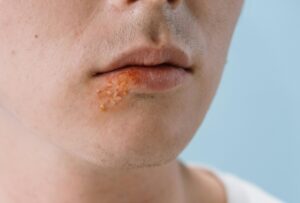
Does type 1 cause encephalitis? Can type 1 cause blindness?
Herpes simplex virus is a cause of encephalitis and/or blindness only when a person has caught it on the face. As mentioned above, a genital infection can only recur in the genital region.
Likewise, a facial infection can recur in the facial region. This means that cold sore virus can very rarely chose the nerve that goes to the eye, or the nerve to the brain and cause problems in those places. Not something that will happen to people with genital infection.
Other herpes questions
Getting diagnosed with genital herpes

Passing on/transmitting herpes
Genital herpes, pregnancy and childbirth
This page was published on 20 July 2026